
Rainy Day Activities for Toddlers at Home: Calm, Simple Ideas for Busy Parents
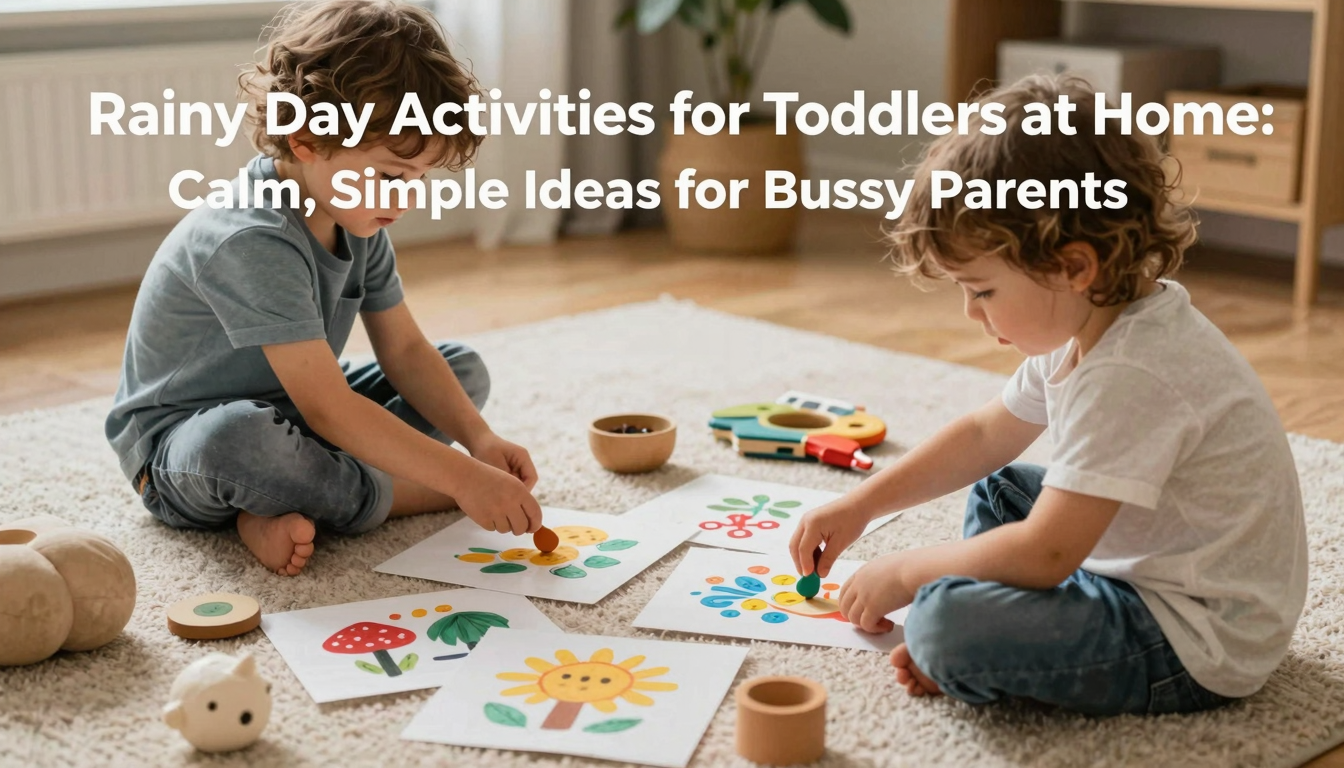
Rainy days with a toddler can feel long before breakfast is over. Your child may want to climb, dump, splash, run, repeat, and then do it again while you are trying to keep the house functional. The goal is not to entertain every minute. The goal is to offer safe, simple choices that help your toddler move, explore, connect, and eventually wind down.
These rainy day activities for toddlers at home use ordinary household items and realistic parent energy. Most take only a few minutes to set up. Adapt every idea to your child’s age, development, temperament, and supervision needs.
Start With a Safe Indoor Play Setup
Before choosing activities, scan the space. Toddlers are quick, curious, and not reliable about safety rules. The American Academy of Pediatrics guidance on toy safety recommends age-appropriate toys and avoiding small parts for young children because of choking risk.
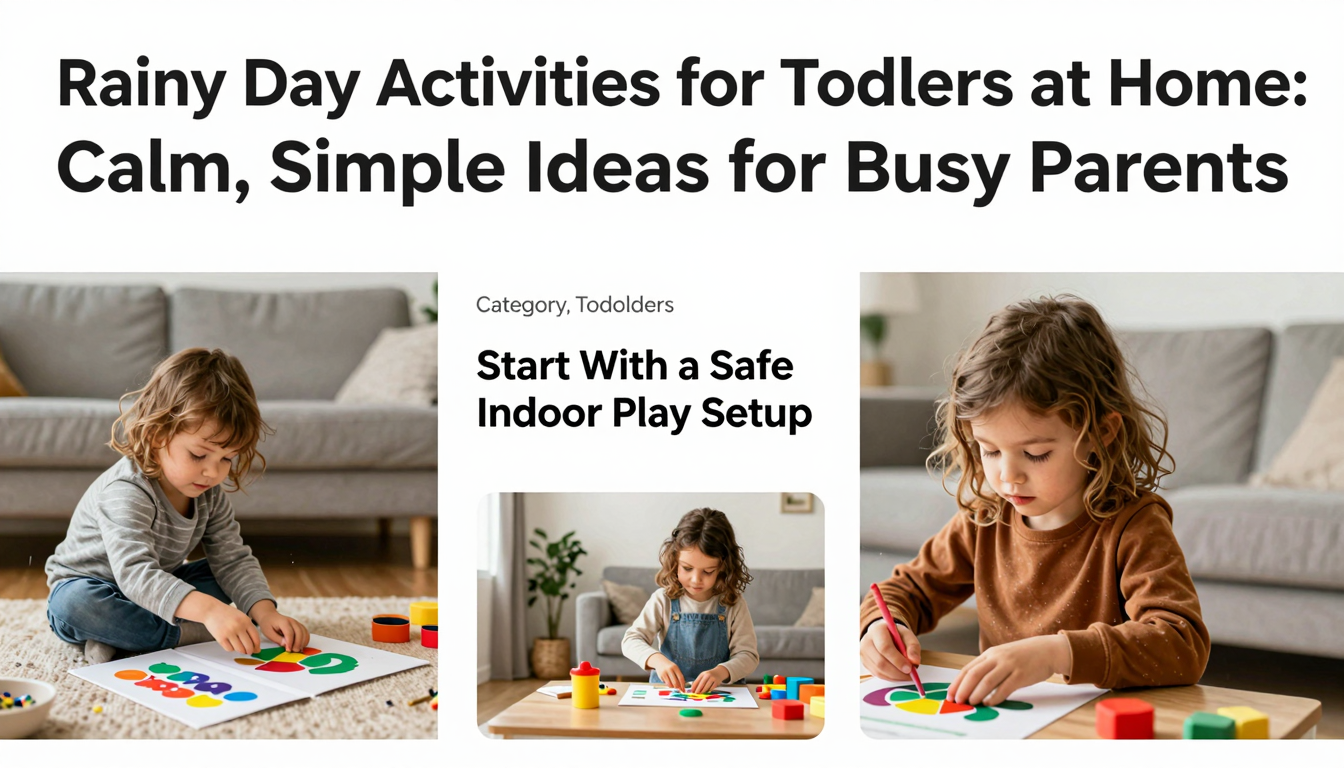
A safer setup might include a clear floor area, soft pillows, washable materials, and toys without loose batteries, magnets, cords, or broken pieces. Keep hot drinks, cleaning products, medications, button batteries, and small objects out of reach. The Consumer Product Safety Commission warns that button cell and coin batteries can cause serious injury if swallowed, so check remotes, musical toys, flameless candles, and key fobs before play.
If your toddler still mouths objects, skip tiny craft supplies, dried beans, water beads, marbles, beads, coins, and anything that can fit fully inside the mouth. The safest activity is the one you can supervise comfortably.
Build a Simple Rainy Day Rhythm
A full indoor day often goes better with a loose rhythm than a strict schedule. Try rotating through four types of play: big movement, focused hands-on play, connection time, and quiet reset.
After breakfast, you might do a pillow obstacle path, water painting, snack and books, then blocks. After lunch, repeat the pattern with new materials. This gives your toddler variety without forcing you to invent something new every hour.
Short independent-play windows can also help if your child can do them safely. Stay nearby and choose low-risk materials such as board books, chunky blocks, nesting cups, or toy animals.
Low-Prep Movement Activities for Wiggly Toddlers
Rain does not cancel your toddler’s need to move. Federal guidance says preschool-age children should be active throughout the day, and toddlers benefit from frequent safe movement opportunities, according to the Physical Activity Guidelines for Americans.
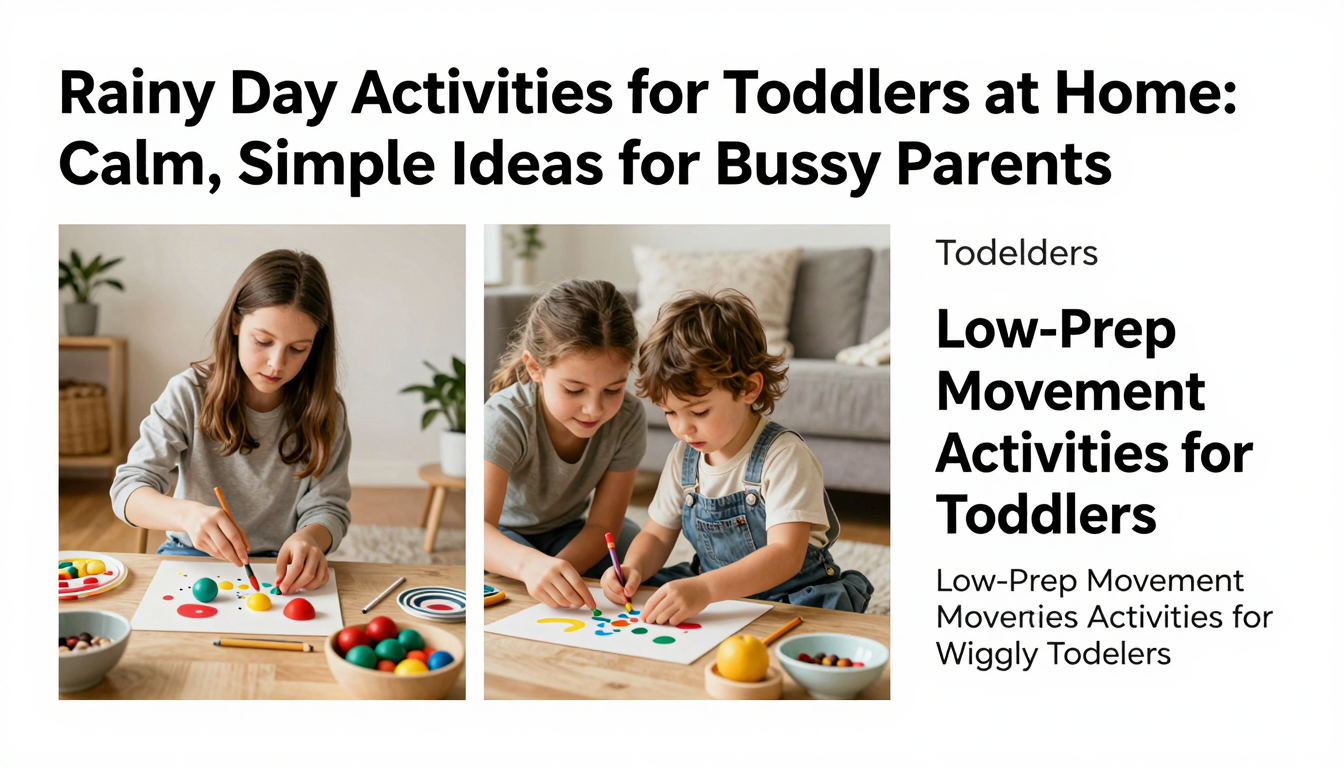
Try a soft obstacle path with couch cushions, pillows, painter’s tape lines, and a laundry basket tunnel. Keep it low to the ground and avoid slippery socks on hard floors. Add simple prompts: “Step over the river,” “crawl through the cave,” or “jump to the island.”
A stuffed animal rescue game is another easy option. Place animals around the room and invite your child to bring them to a “hospital,” “barn,” or “bed.” Add movement: tiptoe to the bear, crawl to the bunny, stomp to the dinosaur.
For music play, use a few favorite songs and simple cues: freeze, spin, march, reach high, crouch low, clap softly. If the energy gets too wild, shift to “slow-motion animals” or “sleepy robots” instead of abruptly stopping.
Sensory Play Without a Giant Mess
Sensory play can calm some toddlers and overwhelm others. Start small. A shallow bin on a towel is easier to manage than a full-table setup. Supervise closely, especially if your child mouths objects.
Water play is often the simplest rainy-day sensory activity. Fill a shallow container with a small amount of cool or lukewarm water, then add measuring cups, spoons, bath toys, or a sponge. Stay within arm’s reach; the CDC drowning prevention guidance notes that young children can drown quickly and silently, even in small amounts of water.
For less cleanup, try “paint with water.” Give your toddler a tiny cup of water and a clean paintbrush. Let them paint construction paper, cardboard, a baking sheet, or the inside of a dry bathtub. The marks disappear as they dry.
If your toddler is past mouthing and you can supervise, try a dry pouring station with large pasta shapes or rolled oats. Avoid small hard foods or objects for younger toddlers. The CDC choking prevention guidance explains that small foods and objects can block a child’s airway, so choose materials carefully and put them away right after play.
Art Activities That Do Not Require Perfection
Toddler art is about process, not the finished product. The paper may tear, the colors may turn brown, and your child may paint for two minutes before asking for a snack. That still counts.
Tape a large sheet of paper to the table or floor and offer chunky crayons. Sit close if your toddler peels wrappers or mouths crayons. You can draw roads, rain clouds, circles, or faces and let your child add marks.
Stickers are a quiet fine-motor activity for many toddlers. Peel the edges up first so your child can grab them. Let them decorate a cardboard box, paper plate, or piece of junk mail. If small stickers are a choking concern, use larger reusable decals and supervise closely.
A cardboard box can become a house, car, boat, animal clinic, or reading nook. Cut windows or doors only when your child is away from scissors or craft knives. If climbing becomes the main activity, flatten the box into a mural instead.
Pretend Play Ideas Using What You Already Have
Pretend play can turn a long afternoon into a story your toddler helps lead. You do not need a themed toy set; safe household objects often work better.
Set up a tiny grocery store with empty boxes, clean containers, a tote bag, and a pretend checkout. Your child can shop, carry, sort, and name foods. Avoid containers with sharp edges or choking-size caps.
Make a laundry helper station with socks, washcloths, and a basket. Your toddler can sort colors, match socks, tuck animals into “blankets,” or deliver laundry to different rooms.
Try a body-parts doctor game with stuffed animals. Your toddler can check ears, knees, bellies, and toes using a toy stethoscope or a clean spoon as pretend equipment. If your child enjoys this theme, Encouraging Toddlers to Identify Their Body Parts: Fostering Early Cognitive and Language Skills offers more ideas for playful everyday language.
Kitchen and Snack-Time Activities
Rainy days often include extra snack requests. You can turn one snack into a supervised activity without making food a reward or a battle.
Let your toddler wash sturdy produce in a bowl with a little water, then dry it with a towel. Soft fruits, round foods, and firm raw vegetables can be choking hazards depending on age and preparation. The American Academy of Pediatrics choking prevention advice recommends cutting foods into safe shapes and supervising young children while they eat.
Offer a snack sorting plate with foods your child already handles safely, such as banana slices, soft cooked vegetables, toast strips, or small prepared pieces. Ask your toddler to sort by color, count pieces, or move food from one section to another with clean hands. Avoid hard nuts, popcorn, whole grapes, large raw carrot chunks, and other common choking risks unless prepared in a developmentally appropriate way.
Quiet Activities for the End of the Day
Not every rainy-day activity needs to burn energy. Some toddlers need help coming down after active play.
Create a book picnic with a blanket, board books, and a stuffed animal guest. Read the same book several times, name pictures, pause for familiar words, or simply describe what you see. Repetition helps toddlers learn patterns and language.
Try a flashlight search in a dim room, not fully dark if that feels scary. Shine the light on a chair, block, sock, or teddy bear and ask, “What did we find?” Use only flashlights with secured battery compartments.
A calm bin can include soft fabric squares, board books, plush animals, sealed sensory bottles, or chunky puzzles. If your toddler throws items, choose soft objects and sit nearby. The point is not to force quiet; it is to lower the intensity.
When Rainy-Day Play Is Not Going Smoothly
Some days, every activity lasts three minutes. Toddlers have limited impulse control and big feelings. If your child is hungry, tired, overstimulated, under-stimulated, or needing connection, a clever activity may not solve the moment. Start with basics: snack, water, diaper or potty break, dry clothes, a cuddle, or a change of room.
If behavior is unsafe, calmly stop the activity and simplify. “I can’t let you throw blocks. Blocks are going away. We can throw soft socks into the basket.” This keeps the boundary clear while offering an acceptable outlet.
Screen time is a family decision, and rainy days may be one time parents use it. The American Academy of Pediatrics family media plan encourages families to make media choices that fit their values, routines, and child’s needs. If you use a show, consider a predictable endpoint: one episode, then snack; a short video, then blocks; a movie, then pajamas.
A Simple Rainy Day Activity Menu
When your brain is tired, choose from a short menu. For movement, try pillow stepping stones, animal walks, laundry basket basketball with soft socks, dance-and-freeze, or stuffed animal rescue. For sensory play, try water painting, sponge squeezing, bathtub wall painting with water, or a small pouring bin with safe materials. For art, try crayons on taped-down paper, large stickers, cardboard box decorating, or paper tearing and gluing with close supervision.
For pretend play, try grocery store, doctor for stuffed animals, laundry helper, indoor picnic, delivery driver, or animal shelter. For quiet time, try board books, puzzles, flashlight search, soft toys, or a calm bin.
Pick one active idea, one seated idea, and one quiet idea. That is enough. Toddlers do not need an elaborate day; they need safe space, warm attention, simple materials, and chances to try again.